play in the dirt

Sunday, May 13, 2012

Total Nedster


In my mind, Ned and I had similarities.  We were/are very outspoken and sometimes, perhaps, too much so.  We'd get ourselves into hot water but would do it again in a minute.  When you have a fire inside, and you speak the truth, you just have to do it.  I remember you saying to me one time after some homeschool drama, "No good deed goes unpunished".  Yup.  The world is sure a crazy place, but it's also a beautiful place.  It's all about us, the people, and the love that makes the world go around.  The rest is Silly Putty.  
Diane Connors

Thursday, November 10, 2011

Monday, January 17, 2011

THE CALDRON. Supreme good fortune. Success.


  All that is visible must grow beyond itself, extend into the realm of the invisible. Thereby it receives its true consecration and clarity and takes firm root in the cosmic order.
50. Ting
The I Ching


Ned will forever be in my heart as a man who made me see my self worth and opened my eyes to painting. His insights and horn playing are etched in my mind, along with a love of cheap wine. Simple things that he taught me like how to carry out the trash are still part of my routine. Thank you for sharing with me so many years ago and still today. ... Memories of being with all of you have shaped who I am as an adult and as a parent.
Cindy

Thursday, January 13, 2011

Ned's notes on house


Luz and Cassidy and I are certifiably eccentric. No doubt.
It is an obsession: A place to be.


Orderly, Beautiful, Classical, yet Unique, non-fashionable.
Non traditional yet with roots, and sensible.
Astonishing (daring) in its honesty with respect to directness in how it serves my (and our family’s) needs and not the “housing market” nor the zoning laws nor the neighborhood’s look.
Open character of interior


Secluded from street and neighbors --
modest appearance, but with presence - even flair.
To match the New England climate and spirit, the house will be closed, tidy.
The house is integral part of the lot, respecting the shape of the land, the trees, rocks --
Integrated with the sun, the seasons, respectful of winds, storms, heat, cold -- all positives & negatives.


It must protect the family’s privacy -- entry should invite, yet only in stages - to the hearth.

It will be self-sufficient as practicable. Passive by nature active when necessary. Solar this and that will be integrated to the max.

Food production is high priority -- large vegetable garden(s), orchard, berries, edible landscape, etc.

Modesty - unassuming, unpretentious, probably gray stained exterior -- shape is hunkered.


Symmetry will be only subtly perceived, and its purpose here is partly to make the construction easy to understand and perform.

Symmetry is broken immediately by the 45 degree theme which becomes apparent even before entering -- the visitor is put on notice to be alert and aware. This is going to be different. (The hope then is to deliver on the promise by rewarding the occupants and guests with a strong sense that the place is for certain people -- not merely an expression of construction practices.)


I want it to be an experience just to stand or sit in there -- I’m going to spend lots of time in there and I don’t want to depend on the outside scenery for something to see. It must be changeable, like a museum. (I.M. Pei National Gallery to me is a good living room.) Sculpture, flags, paintings, gardens, books, mobiles, with accessible storage, work surfaces, room to move around, play trombone, swing your arms -- do T’ai Chi. Good music will be better in a large space and accoustics will be good where surfaces are not parallel.

The design gives me shivers. (I believe [now - Dec 1990] that this style will be followed. Can that idea become a career?) It expresses my urges extremely well, and keeps getting better.


... adaptable to smart house technology ....

One level -- no upstairs, no cellar.

The whole house is - the - living - room ... So it should glorify and promote our well being. It will nourish us, please us, surprise us, delight.

Its construction, its bones, should show, demonstrate their work, and their material.

Nature should be at hand. The local ledge will participate along with the trees and shrubs & flowers -- even wildlife.

Views will be taken full advantage, but need not throw themselves at us.

Lighting -- natural and artificial -- a personal passion ... I want to watch the movie, not the projector.

Strong influence from Japanese -- the sense of order and simplicity, respect for nature, yet a wish to translate that sense into American, -- our essence.


It keeps being square in plan -- the urge for the classic, the eternally simple idea. Sit in the center of a square. Start with that -- and keep that -- then vary the theme. The trick is to keep the variations and playfulness from being too strong. Keep it rooted and useful, modest yet inspiring.

Dominant living room; dining area & kitchen integrated with LR. Other areas off LR are greenhouse (sun room), studio (T’ai Chi) with Japanese garden view;
MBR -Northeast exp.
Kitchen - East view -morning sun, bread table, gas cooking, double sink, ample workspace & storage & recycle
LR View of all directions -- South predominant for light
Fireplace, sunny part with plants -- serene.
All rooms will have dead space -- no thru traffic.
In LR, seating area will be out of traffic.
Vestibule entry - coats, lavatory, also covered porch.
Recycle rain water, gray water
Solar heating, hot water, electricity
“Grow hole” (winter greenhouse)
Various heat, cooling, ventilation systems
interior -- sheetrock is fine -- it’s the backdrop for form and structural features and some careful woodwork & stone, etc.
used doors, old posts, fixtures, hardware, found art and artifacts are welcome.

Thursday, September 23, 2010

Gerard J. Roy photo


I Am Bone Tired
Lyrion ApTower

I am bone tired from traveling that last hard mile with you.
The blasted holes and smoking stumps along the way
have drained the sun from me.
So heavy, so heavy--this weight of tears, this burden of love.
Yet were you to ask, my heart would leap
and drop all trophies to walk with you again.
How flimsy is weariness when balanced against
One more glimpse, one sound, one touch of you?

Come back! There are still more words to find,
more heart to open.
My conceit decrees that it is not Your Time
Listen--I will say when--and it is not now!
And who am I to decide your date? I will tell you.
I am the one who washed your feet,
wiped your sweat, smelled your fear,
And still held on. I am the one who loved beyond pain,
through exhaustion,
past stench, beyond doubt.

Yet if the sands of time in both worlds were poured out for me
Could I stop your coach from its homeward journey
or ease the wrenching of your death?
When the sun is gone I look inside for illumination
At the dark of moon a question forms slowly--
For whom do I mourn?
You--now whole and free, dancing in the light;
Or me--wandering my hard last mile
without your frail arm to guide me?

Lyrion ApTower, HPS 1998
We'Moon '09
Gaia Rhythms for Womyn
www.wemoon.ws

Saturday, July 17, 2010

Peggy Clifford


I knew Ned for 50 years. I loved him on sight and I still love him.

He was perfect.

Even his imperfections were perfect. As you may have noticed, he was bald, but in his presence, men with hair looked over-dressed.

Talent was in him like light He could have been a great painter, a great architect or a great designer, but he had no interest in the either/or concept, or limits of any sort.

And so he made brilliant paintings. designed striking buildings that derived from no “school” but his own, conjured and made furniture that renders all other furniture obsolete, and he was a professional golfer, a teacher, a ski instructor, a businessman, a politician, a rancher, a writer, and a fierce advocate.

He didn't do all those things at once, though he almost always did several things at one time, but he never seemed to be in a hurry. In Satchel Paige's words, Ned “jangled gently as he moved.”

Ned was a pluperfect anti-politician. In 1970, he and Hunter Thompson ran on the Freak Power ticket in Aspen/Pitkin County, Colorado. His platform was a visionary, but practical program for preserving both the pristine wilderness and the unique character and small scale of the town. Its simplicity and logic were dazzling. As residents rallied in support of Ned, business and real estate interests launched an ugly scare and smear attack; Freak Power lost by a narrow margin. 26 years later, Ned made another foray into politics as the Libertarian candidate for governor of Connecticut. The primary plank in his platform was, to put it as politely as possible. school reform.

Ned lost the election, but children and parents won a passionate, eloquent champion. In newspaper columns, a blog and on public access TV, Ned had at the schools and the people who run them. His last book will be published next year. Among its possible titles is “a dangerous man,”

Ned was dangerous -- in the way that Jefferson and Thoreau were dangerous. And that's not bad for a former captain of the Yale golf team.

Friday, July 16, 2010

Danis


The first memory I have of my cousin Neddie (Glenna was my dad Ned's sister—lots of Neds and Glennas in the Collett/Vare clan), was in the driveway at our house in RI when I was about 6. He was grownup already and had shown up in the coolest sports car. An Alfa Romeo. He had a contagious grin and gave my sister Glenna and me each a ride around the block—with the roof down! That began my love of cousin Neddie—the first and only guy I ever loved for his car. And although our paths rarely crossed over the years, he was a bright and warm spot in my heart.

In the 70s I carried a green fringed suede shoulderbag with an exquisite beaded pattern on it that Neddie had made. A connection with my hippie cousin out west with vague stories of him living in a schoolbus or Aspen or a ranch.

In 1982, my groom, Wayne, and I took our honeymoon in Colorado, and one of our destinations was Colorado Springs where Neddie, Luz, and little Cassidy were living. Two moments stand out. We were going to walk down the street for pizza and Cassidy didn't want to wear shoes. Rather than just putting shoes on him despite the protest (as I would've been inclined to do), we observed a rational discussion between an adult and a 3-year old. Unheard of. It was concluded that he could walk barefoot to the restaurant, but had to put shoes on to go inside because the sign said so. Cassidy was fine with that and off we went—happily. We thoughtfully thought, Huh. And that event was an example we drew on in raising Ellie. And as with many other families, Ned, Luz and their book helped give us the courage and inspiration to homeschool.

The other moment was after we newlyweds (with one week's experience under our belt) regaled Ned and Luz on the wonders of marriage, Ned said, "We're going to get married when we've been together for 25 years. As a celebration." We thought, Huh? And I think that's about the way they did it. Tried and true.

Ned remains an image of warmth, honesty, creativity, incisive thinking in a freeform format, thought-provoking discussion, and many other things—a cantankerous ol' bat with bright blue eyes and a winning grin. Love you, Neddie.

Danie

Sunday, July 11, 2010

Bill


I live about half a block from the property Ned owned on Neale St. in Aspen.

I first visited Aspen in 1968. On the day after Xmas I was walking around the East End & I stopped to admire to Ned's complex of funky outbuildings & Victorian house. Someone said "hi, come on in". It was Ned. The house was full of people, some still grogged out from a wild Xmas party the night before.

Like Ned, I too was an architect. I was then living in Chicago & he was most interested in hearing my accounts of the recent disastrous Democratic convention. What a gentle & kind man. We bonded immediately & while not close friends I will always blame him for making me realize that I too might be able to make it Aspen.

Ned had a unique & quite ability to inspire. He had a lifestyle of such truth & integrity that it came through immediately. I moved here the very next year & have been here ever since.

Thanks Ned!

My heartfelt condolences go out to his family & friends.

Best
Bill

Saturday, July 10, 2010

Holly Lynn Danyliw


Ned was a guiding light for me. He gave me courage to stand in my beliefs and not worry about what others said about how I wanted to navigate my son, Andrew's life through homeschooling/unschooling.

Coming to Guilford and your home, I would feel safe again and yes, at home. Like an alien finding her alien planet and Ned being the leader of this planet. On this planet, the energy of it was so green, round, wooded, beautiful flowers, books, plenty of light and most of all, abundant, radiant life.

I will never forget this time in my life and the power of Ned's integrity and openness.

The first time I met Ned was at a homeschooling conference at Manchester Community College. I walked over to Ned and Luz's Unschooling table with my son, Andrew and Ned proceeded to ask Andrew about schooling and life.

I remember Andrew's eyes lighting up listening to an adult who obviously stood in his Truth.

As we left the table, I turned to Ned and said, "you realize he is changed forever now. I will never get him back to schooling and Ned, replied, Good!" with a sparkle and a gleam in his eyes. And I thought to myself: Oh, boy, I am screwed.>>>>

Blessings to you, Luz, your son, Cassidy and the rest of the family

Holly Lynn Danyliw, Andrew Danyliw and Pete Danyliw

Sarah Loughran


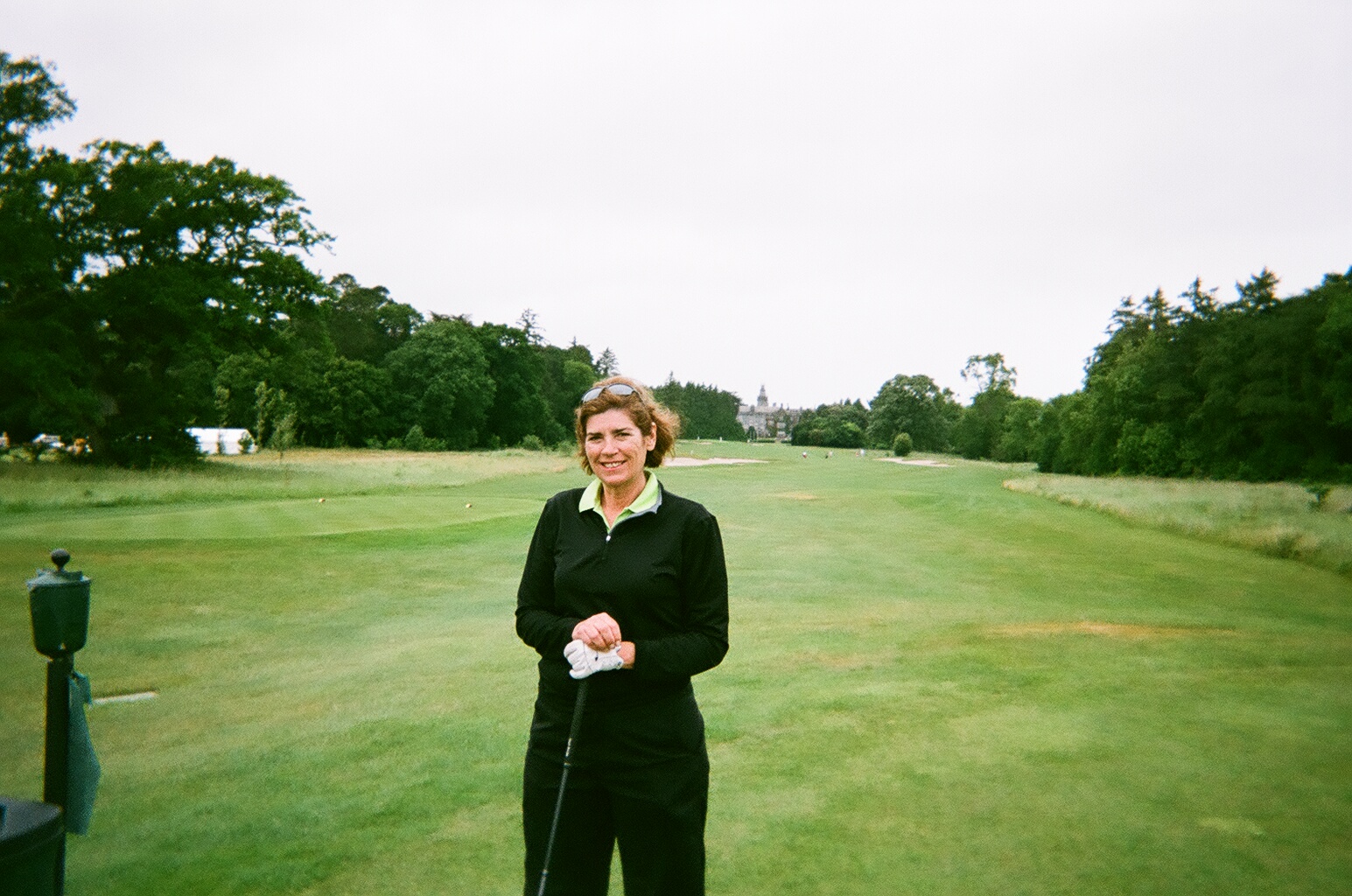
There is not a game of golf which I play that I do not think of Ned, nor a full moon upon which I do not think of you and your garden.
The golf course is Adare, in Ireland.

Thursday, September 24, 2009

a warrior on the field of ideas


Although I first came to know Ned politically, my affection for him and his views transcended politics. I say this because I always believed Ned was a warrior on the field of ideas. On the battlefields of education and ecology, he was one of my heroes in particular - always there when you needed him but never expecting anything in return. Ned was true to his beliefs. He never parsed words or phrases for political gain. There is so much for so many who engage in political debate today to learn from him - especially when so few say what they mean, and mean what they say.

I miss Ned,

Frank Grundman

Wednesday, September 9, 2009

Freak Power


"Getting elected to make laws for other people is not like me," he said. "Apartments were going up fast and us tree huggers had to fight against inevitability."
For Vare, his compulsion to run for office came not from seeking attention, but to preserve the town he came to love via his travel across the country. His 1970 quote in The Aspen Times sounded like something that could be said today.

from:
Freak Power: Ned Vare reflects on a special time in American politics and culture
By: Eric Montgomery, Editor
05/08/2007
Clinton Recorder

view the entire article:
http://www.zwire.com/site/news.cfm?newsid=18314381&BRD=1634&PAG=461&dept_id=8416&rfi=6


   +------------------------------------------------------------------------+
   + As featured in the on-line version of Clinton Recorder.
   + Web Address: http://www.zwire.com/site/news.cfm?brd=1634
   +------------------------------------------------------------------------+

Monday, September 7, 2009

Bruce

Ned was working on five books these last years. One was called "How to Help Your Wife." Another was how to design your own home. He was writing an autobiography and working on a collection of his articles about schools and learning.

This last book has several possible titles: School Is Hell; Racoon Hands; A Dangerous Man. Our friend Bruce Thomas wrote the following introduction to the book.

Let’s say that institutionalized schooling (call it School) has colonized learning. Here’s a thought experiment combined with time travel: Superimpose School on a 17th century band of Lakotas. What you’d have for young braves is a syllabus of courses like “Prairie Craft 203: Crawling across the grass downwind of the buffalo”; or Basic Bow and Arrow 235, subdivided into subunits like 235-C: Arrow Pointing and Release.” And so on. The courses would be taught by special teachers brought onto the tribal grounds solely for course instruction, such courses based on a filleting of the wholeness of buffalo hunting into neat skill slices. None of the instructors has ever actually engaged in buffalo hunts but each had taken the requisite courses given by buffalo hunt virgins who had themselves been certified by other buffalo hunt virgins. Young braves who failed to pass 70% of their courses would be classified as tribal defects and expected to slink away from the encampment in the dead of night. (The slow descent of the tribe into starvation resulting from buffalo hunt failure would go—as an exercise in pedagogical tact-- unrecorded in the annals.)

Learning is what people do. School is what is done to them. Happily, sometimes the two intersect. But, these days, not very often. Education is very solemn, very big business, very big politics. So the still small voice saying “ Hey, wait a minute, what’s going on here?” doesn’t get much of a hearing.

Ned Vare is one of those voices. I need to make the usual admissions here. I’ve known Ned since 1969. I am not objective. But who the hell wants to be objective about children? The single most important ingredient in a happy childhood is at least one adult who is irrationally committed to that child. Irrationally committed. I remember very clearly when I got hold of this insight. I was at a playground with my daughter and there was a mother there with her child. Her child was a royal pain in the ass: willful, stubborn, loud. The mother serenely abided the widely varying contours of her daughter’s behavior and, when playground time was over, she scooped daughter up in her arms and took off for home. I left the playground confident that the willful child would , in the course of time, and within the irrational embrace of an unwavering parental commitment, grow up into a reasonably decent human being.

Schooling, by the severest of contrasts, is a triumph of rationality, the Mount Everest of tidiness. It defines when children start formal learning. It organizes them into groups defined by age. It defines what they should know and be able to do at each age. It has tests that purport to reveal what they know and can do at each age. It works basically like a passenger railroad. Children are loaded into a car marked first grade. (Other children are loaded into cars marked 2nd through 8 th grades). The train pulls out of the station and into a tidy curricular landscape. The teaching conductor in each car calls the children’s attention to what they must learn from the landscape; periodically the testing conductor comes through to conduct the assessment that determines whether or not the children will pass onto the 2nd grade car. In the best of all possible worlds, all the children move along yearly until they reach the 8th grade car, where they receive a diploma (wearing gown and cap) that enables them to pass on to another railroad line called high school.

And so it goes. It’s unassailably logical. It’s also utterly crazy. Ned calls attention to the craziness. Although he will occasionally finger a specific individual for some particularly egregious piece of silliness, his focus is for the most part on the systemic craziness. He has always been wont to say that everybody is doing the best he can. I think it is fair to say that his “everybody” includes schoolteachers. What he writes about is a system that is a triumph of adult rationality. But the logic of childhood is emphatically not the logic of adulthood. The learning of children is not linear, not sequential, not conformable to external timetables. It is driven by passions and engagements. It is often not predictable and most of the time it is not captured by adult measurements—particularly the kinds of learning that entail real and durable understanding.

Ned’s voice is thus the voice of dissent and the origins of such dissent is always an interesting question. By dissent I mean fundamental disagreement with some societal fundamental. I have a hypothesis (i.e., a theory in short pants) about the origins of Ned’s voice of dissent. The hypothesis comes in three parts. The first part is a basic state of cosmic pissed offness. How it comes about, I do not know. Some are born to it, others bred to it. Whatever its origins, it can exist in a condition of latency until it gets activated by a trigger, which is often some specific event.

In Ned’s case the trigger may have been an event early in his post-Yale career, when he was teaching elementary school in New Hampshire. There was in the school a boy whom we would now understand to be autistic. He was ill-treated by the other children. But by Ned as well, as he recalls it: “”That boy had every reason to hate everyone there for the way they treated him. Including me. We didn’t know what to do with him. That’s one of the things I am deeply ashamed of, still today. I was 23 then, I’m now 74 and I’m still more than ever ashamed of the treatment he got at our hands.”

What got activated, I think, was a sense of how justice relates in a profound way to childhood. George Dennison in The Lives of Children is one of the few to have written about the relation of justice to the lives of children generally and to their lives in school specifically. Anyone with a reasonably unimpaired memory of his/her own childhood will recall that constant refrain from childhood: “That’s not fair!”

The third item in the recipe for dissent is the Authorizing Text. The text usually is written—an article, a book, a speech. But it can also be a live voice. In Ned’s case I suspect it was both. The written text was that of John Holt (How Children Learn, How Children Fail). Just around the time America was getting into its Cold War snit about the state of American education, Holt was coming out with books that fingered School as a major impediment to learning. Holt’s voice was supplemented by that of the woman who was to become his wife, Luz, a disillusioned teacher. The two together had the effect of completing the process by which Ned became a voice of dissent in the matter of School.

Peggy Clifford, who has been a friend of Ned longer than I, has written a précis of his life that in its few deft words of portraiture goes a fair distance toward explaining what it is that gives these pages their distinctive heft and pitch. I end with her words:

Ned has spent his life learning—how to paint, how to design and make furniture, how to play golf (even though his mother was arguably the greatest woman golfer in the world—enough to discourage any red-blooded American boy from even looking at a golf club), how to run a ranch, how a golf swing works (it’s a spiral, not a circle). So when a man who has spent his life learning spends ten years learning how school does what it does to people, and why, the result is apt to be explosive and revelatory.

Sunday, September 6, 2009

Barbara


The Passing of a fellow gardener who liked plain talk and politics
Barbara Douglas
Shore Line Times, July 31, 2009

You can’t help but stop and take notice when a man and a gardener like Ned Vare dies.

Vare, a longtime Guilford resident known for his forthright opinions on everything from the shortfalls of the public school system to the abuse of the drug Ritalin in treating ADD in children, died July 22 of pulmonary fibrosis.

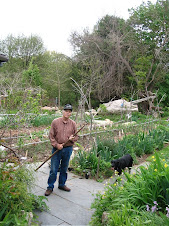
What Ned was not widely know for was his gardening prowess. Outside of the political and social spotlight, Ned’s life was an ode to the simple pleasures of getting one’s hands dirty in the garden. The disease that ended his life last week took him away from his garden much earlier than that, a hardship that only a fellow gardener can understand.

With his trenchant humor and youthful energy, Ned made a name for himself in Guilford. A fixture on public access television, Ned often post-scripted his television broadcasts with a video diary of his vegetable and flower gardens. A visit to his home was often marked with a stroll through the garden or the labyrinth he and his wife, Luz, created. Inside, a wam mug of tea and something to eat was offered. And the discussion was always lively and interesting.

He was - despite the angry hue and cry of those who censured him for his plain talk - a brilliant man. A golfing expert who authored several books on the subject, Ned was a professional skier and skilled squash player, a Yale graduate, an elected politian, a comrade of such notables as Hunter Thompson and Timothy Leary, and a media magnet who wrote prolifically for magazines and newspapers.

But outside of the spotlight, year in and year out, he tended his garden. Tomatoes, cucumbers, lettuces (which he grew throughout winter under tarp tunnels), peppers and a wide variety of flowers graced his garden. He took pride in his abiblty to cultivate fresh, homegrown food in an era of foods imported from across the globe.The Ned I knew was a determined Libertarian, a gracious host and a devoted gardener. Opinion and fresh food flowed whenever I sat at his table. There was never a moment when the conversation wasn’t challenging and the food delicious. He had grace generosity, style and brains.

Contrary to his critics, Ned was not an attention-seeker, but rather a man who cared deeply for children (he and Luz educated their own son, Cassidy, who is living proof that their initiatives in “unschooling” http://borntoexplore.org/unschool are sound), his community and the world. He was a pioneer in the political arena and in the garden.

Also among the things he held dear were compost, twig teepees, marigolds, Queen Ann’s Lace, and earthworms. He seemed to believe in the redeeming powers of gardening. He was not so naive as to believe that gardening could put the world to rights: no, he took up that task himself, right to the end. His garden was simple, productive and excellent in design. I took several gardening cues from him.

Many, including myself, were attracted by his philosophy, and his garden. We recognize the loss that Ned’s death brings, and the hope that he’s now part of something greater than this world and even these gardens That eternal bloom is something in which gardeners never seem to lose hope.

For a while now, heavier dews will hang in the garden. But eventually, the delicate balance will return. Ned once said he viewed life as “a hilarious adventure.” For 75 years, he rode that wave. What he leaves behind will resonate in the minds and gardens of all the fortunate people who knew him.

Visit my gardening blog: http://satoriinthegarden.blogspot.com

Saturday, September 5, 2009

Debbie


In Memoriam

It is with great sadness that we inform our supporters that a great friend and homeschool freedom champion, Ned Vare, has died. Ned was a fearless fighter for educational freedom. I first met him in 1990 when he was in the forefront of the effort to defeat government regulation of homeschooling in Connecticut. He was wise to all the background, history, and rationale behind public schooling and homeschooling.

Over the years, he not only educated me on the ways of the educational world, but educated untold others. He and his soulmate, Luz Shosie, met in 1973 at Ned's ranch in Silt, Colorado. Together they raised their son, Cassidy, without schooling, with what is now called UNschooling. In essence, they wisely guided Cassidy in educating himself, an experiment, they say, that surpassed all of their expectations. Ned and Luz were inspired by the writings of John Holt, and together, they started a support group for unschoolers and operated the Unschoolers Unlimited Newsletter for many years.

More recently Ned penned a blog entitled, “School Is Hell”. Ned could always be seen supporting the right to educate in freedom at every gathering across the state, from his hometown in Guilford to Hartford and beyond. Ned was never afraid to confront any government official whom he believed was acting in any way to deny parents their rights. Ned was tireless in his ability to engage legislators in quiet, polite, but persistent conversation educating them as to the rights of parents and why they should support educational freedom. Ned was extremely successful at this endeavor and was instrumental in persuading many key legislators to support the rights of parents in Connecticut.

We are also fortunate that Ned, with Luz, wrote his thoughts about educational freedom in a book that I proudly keep in a most prominent place in my home. It's called “Smarting Us Up, the Un Dumbing of America”. Ned was a true inspiration, who had a keen wit, a most engaging personality, and always the nicest smile. I was proud to call Ned my friend, and he will be sorely missed. A memorial service is planned for him at a date to be announced in the fall.
- Deborah Stevenson - Exec. Dir., National Home Education Legal Defense

Mike and Marjorie


Our neighbors, Mike Elliot and Marjorie Pawling wrote:

Ned Vare, whose passions were so extensive he would have made a Renaissance man proud, died July 22 in his home in Guilford at the age of 75. He had been diagnosed with pulmonary fibrosis and in declining health for several months.

Known to many in Guilford through his regular appearances on public access television lambasting the public school system and extolling the virtues of home schooling, he was much more than a contrarian to officialdom.

He found in golf, architecture, and even politics avenues to explore his appetite for adventure and excellence. Author of books on golf and home schooling, he was also an avid gardener who lectured on that subject, as well.

He lived the last 18 years of his life in a house he designed with an array of features inspired by his time in the West. On the walls were pictures he had painted and in the living room, furniture he had designed. Outside, the landscape reflected his love affair with nature and his desire to live in harmony with his environment. Benefiting from passive solar gain, his plants came to life indoors ahead of the season; innovative rain barrels provided water for the extensive gardens, and the bounty of the flowers and vegetables were shared with many fortunate friends.

Born in 1934 in Philadelphia, he was the son of Glenna Collett Vare, a champion golfer who won the United States Amateur Championship six times during the 1920s, and who was called the “female Bobby Jones” of her time. His father, Edwin Hornberger Vare, was descended from a prominent political family in Philadelphia and an avid sportsman in his own right.

The son would begin collecting his own trophies in his youth and went on to Yale University where he captained the golf team. He also captained the squash team while pursuing his architectural studies. But, unlike his polo-playing father, the only horses in the son's life would be workhorses.

After graduation in 1956, he worked for various architects in New Haven, and also became a golf professional with a short stint on the PGA Tour. Later he moved to Conway, N.H. where he taught elementary school and got serious about the business of learning and educating himself. In later years he would take numerous teaching assignments at alternative schools.

In the early 1960s, he traveled West first settling in Taos, N.M., where he added ski instructor and house painter to his resume. He moved on to Aspen, Colorado where he became active in local politics. Elected a City Councilman in 1969, he was part of a group who tried to resist the rapid emergence of their idyllic ski resort into a winter sports capital.

Commercialization won out, and Vare moved on. This time to Silt, Co., where he bought a 240-acre spread, and began the life of a rancher, growing barley, alfalfa, and vegetables. There he met his wife, Luz Shosie, who would share his passions for the outdoors and an independent lifestyle.

They returned to the site of his undergraduate days in 1984 with their 4-year-old son, Cassidy. Faced with the prospect of sending him into a system whose methods they questioned, they began their commitment to home schooling. Eventually, they organized a support group, Unschoolers Unlimited, a group of like-minded parents who believed in letting their children choose what, where, and with whom they would learn.


In New Haven he opened a golf shop and continued teaching his favorite sport. Five years later, with architectural plans under his arm, he searched for the perfect site on which to construct his latest creation, a house inspired by the Navajo hogan of the southwest. He found a sheltered piece of property on the edge of Guilford and built his current home.

He wrote and illustrated his first golf book, “Hip Pocket Golf Coach,” in 1983, and his second, “Golf: The Money Swing,” in 1998. His third book, “Smarting Us Up: The Undumbing of America,” was written with his wife, Luz. He continued to add commentary and instruction on his blog “School Is Hell.”

Never able to stay completely out of the political arena, in 1998 he ran for governor in Connecticut, not surprisingly, on the Libertarian ticket. In 2002 he tweaked the Guilford School District by threatening to run for Schools Superintendent.

Besides his wife, Luz, and his son, Cassidy who owns and operates a bicycle shop in Brooklyn, N.Y., he is survived by twins Jesse Vare of New Castle, CO, and Tai Vare of Malibu, CA; a sister, Glenna Vare Kalen of Narragansett, R.I.; and Cassidy's wife, Kim Kaplan.

Ned’s daughter


Jesse Vare-Hamlin, Ned’s daughter:
 
Ned Vare died in his home in Guilford, Connecticut, on July 22nd, 2009, one week after his 75th birthday. He was the Real McCoy.

Ned wrote this for his blog: http://school-is-hell.blogspot.com/
Age 73, Retired (actually underemployed). Lived in over twenty locations in US. Graduated from Yale, where I studied architecture.  Captain of the Yale golf and squash teams. Worked for several architects and freelance. Army National Guard 6 yrs. PGA golf tour player-six events, teaching pro. Ski Instructor, Taos, New Mexico and Aspen Colorado. Furniture designer/maker (tables in use to this day in the Conference room at the Aspen Institute).  City Councilman - Aspen. Antique dealer. Interior designer. Painter, Sculptor. Rancher/Farmer - Silt Colorado 9 yrs. Writer, three books.  Columnist, local newspaper, and now, writing next book -- an autobiography.  Born July 15th, 1934 Philadelphia, Pennsylvania. 

In 1970, Ned Vare ran for Pitkin County (Colorado) Commissioner on the Freak Power ticket. In 1998, he was the Libertarian candidate for governor of Connecticut.
Vare designed, illustrated and wrote his first book, “Hip Pocket Golf Coach".
He wrote and illustrated “GOLF: The Money Swing" and the third, ”Smarting Us Up The Undumbing of America,” he co-wrote with his wife, Luz Shosie. He was working on a fourth book about schools and learning.  His work continues, through his wife Luz. 
What he did not mention in his blog: He was a father of three; to me, (his daughter, Jesse) my twin brother Tai Vare, and Cassidy Vare -our brother whose Mom is Luz Shosie who is his current wife of 34+ years. He has a wonderful sister named Glennie Kalen who lives in Narragansette, R.I. with her husband Norman and their dog Santo.

My Dad was a brilliant painter whose modesty was in the fore at all times...I think he could have learned to take a compliment better. From afar he taught us to "do the right thing" and "always do your best, even better than your best", "think ahead, pay attention to detail", "don't waste anything, or anyone's time", "find out what you like to do and do it", "if you are going to do it, do it right", "Be kind", "practice, practice practice", "if you are asked to do something, do more", "go beyond the call of duty", "you are perfect, just the way you are"...

When we were kids he played the Trombone and it made us giggle. He played 'Moonshadow' on the acoustic guitar and sang the words to us. He was gifted with a very dry and quiet sense of humor, much like his late Mother Glenna Collett Vare (who was known as the female Bobby Jones of Golf). He loved Chocolate ice cream more than words can say...he loved having his feet rubbed, he loved working the land, he respected the land, he was a Master Gardener...He believed in Library Cards, not Credit Cards. He absolutely loathed mediocrity, and sadly, he saw too much of it in this world. He Loved the Masters; Georgia O'keefe, Paul Klee, Gustav Klimt, Paul Gauguin, Pierre-Auguste Renoir, to name a few. He loved his wife, Luz...And her cooking! Luz gave him Reiki and took good care of this wonderful man. She is his Angel.

He gave good hugs, he was conscientious, thoughtful, kind, and gentle. Everything about him and his life was deliberate, by design, nothing was by default...he had beautiful brilliant green eyes, with a blue rim. He was one of a kind. He was my Dad. He died peacefully in his Anasazi inspired home (that he designed and built) where he felt most 'at home' on this Earth,  just a bit more than a few yards from the dining room. He was resting, probably the TV was turned on to the PGA tour when Tiger Woods was getting rained out... It may have been raining, but best of all, the plants he'd planted were flourishing in the garden where Luz continues to do his bidding, planting, growing, living, learning...

I miss him dearly, the sound of his voice, his beautiful handwriting, his hand-painted Christmas and Birthday Cards...

Thankyou, Ned!


Here are some stories and pictures from Ned's life and our life together. I hope friends and relations will add your memories. You can post them here or send me an email mailto:Nedvare@ntplx.net or snail mail if you'd like me to post your words.
Thanks,
Luz